By Ju-Wei Chen, Creative Director at Txengo Studio
“I can smell the paint. Is it toxic?”
This is a question we are often asked by our international clients when renovating a home in the UK.
It is understandable. After a room has been freshly decorated, there can be a distinctive smell, and naturally this raises questions about what has been used and whether it is safe to live with.
But does smelling paint mean that it is toxic?
Not necessarily.
Smell, VOC content and toxicity are often talked about as if they mean the same thing. They don't. Understanding the difference can make choosing materials for your home much less confusing.

Why Does Fresh Paint Smell?
Modern paint is made from a combination of pigments, binders, liquids and additives that allow it to provide colour, adhesion, durability and the required finish.
As paint dries, some volatile ingredients can evaporate into the surrounding air. You will often hear the term VOC, which stands for Volatile Organic Compound.
VOCs are not exclusive to paint. They can be found in many products used within our homes and everyday lives.
Different paints contain different levels and types of volatile substances. Traditional solvent-based paints generally have higher VOC content and stronger odours, while many modern water-based paints contain considerably less solvent and produce less odour.
However, this is where an important misunderstanding occurs:
A strong smell does not automatically mean that a paint is toxic, just as having very little smell does not automatically tell you everything about a product's safety.
Odour is something we can detect. Safety requires us to look at the actual product, its formulation, technical information and how it is intended to be used.

Are Paints Sold in the UK Regulated?
Yes.
Decorative paints and varnishes sold in the UK are subject to regulations that set maximum VOC content for different categories of products. Relevant products must also carry information identifying their product category, the applicable VOC limit and the product's maximum VOC content.
This is one reason why, as designers, we look beyond simply choosing a colour.
We want to know what the product is, where it is being used and whether it is appropriate for that application.
It is also important not to interpret regulation as meaning that every paint is identical or that precautions are unnecessary. A standard interior wall emulsion is very different from certain primers, specialist coatings or solvent-based finishes.
The manufacturer's technical and safety information should always be followed.

What Does “Low VOC” Actually Mean?
VOC stands for Volatile Organic Compound compounds that can evaporate into the air.
Paint manufacturers commonly provide information about the VOC content of their products, allowing specifiers and consumers to make more informed choices.
Over time, the paint industry has increasingly moved towards water-based formulations, particularly for interiors.
But water-based doesn't mean that the tin contains only water.
Paint still needs to perform. Depending on the formulation, it may contain ingredients that contribute to adhesion, preservation, flow, drying, durability and finish.
This is why a water-based paint can still have a smell when it is being applied or drying.
The better question isn't simply:
“Can I smell it?”
It is:
“What product are we using, what is its VOC content, is it appropriate for this space and are we following the manufacturer's instructions?”
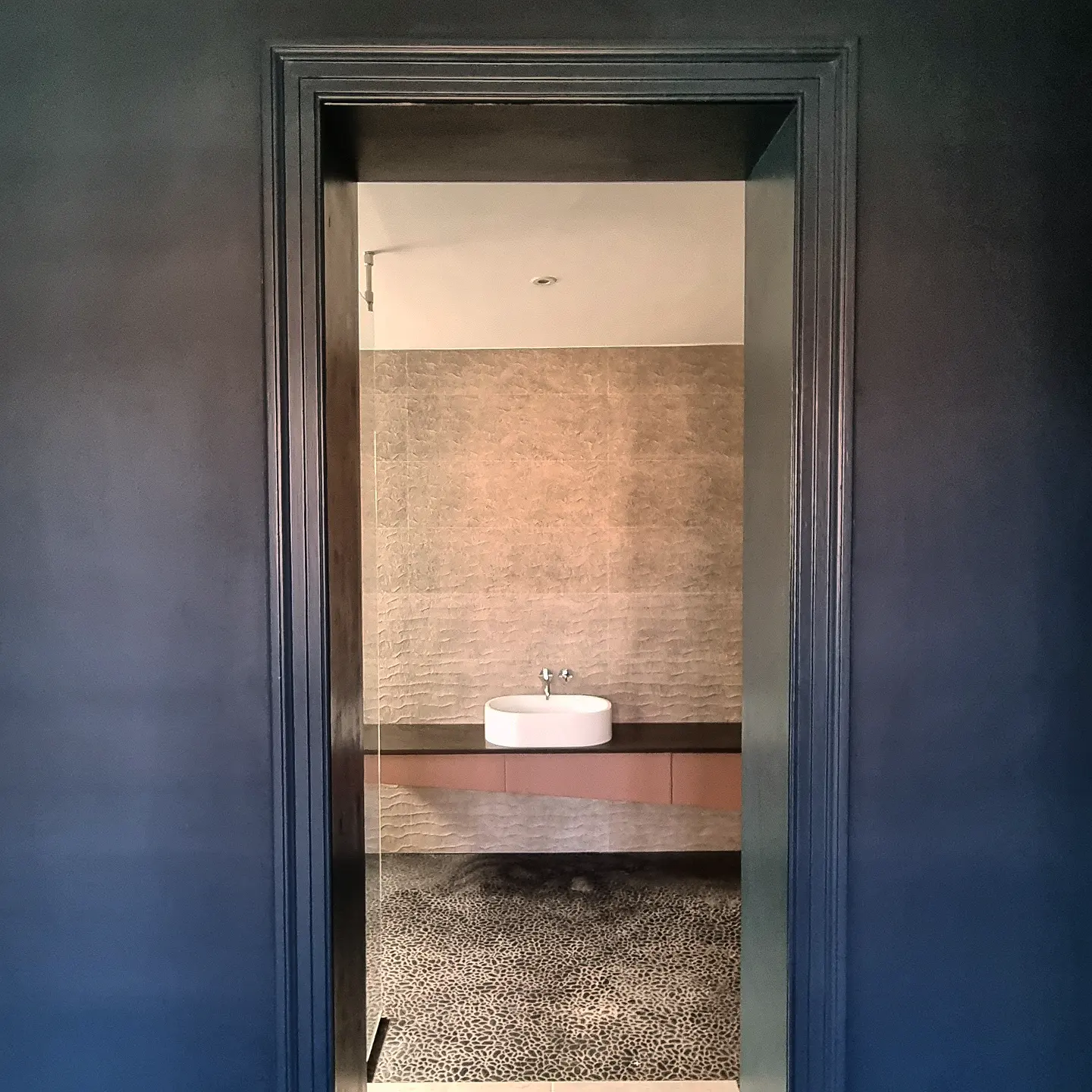
What Paint Brands Do We Use?
At Txengo Studio, we regularly specify established manufacturers such as Farrow & Ball and Dulux, alongside other specialist paint and coating manufacturers depending on the project.
We don't select a paint purely because of the name on the tin.
Different rooms and surfaces have different requirements.
A bedroom wall may need a very different specification from bathroom walls, kitchen joinery, skirting boards or a busy restaurant.
When selecting paint, we may consider:
VOC content and formulation
water-based or solvent-based system
durability and washability
moisture resistance
surface and substrate
matt, eggshell, satin or gloss finish
colour consistency
maintenance and longevity
manufacturer's technical and safety information
Many contemporary interior products are now water-based and lower in VOCs than traditional solvent-based alternatives.
For example, Dulux states that its interior emulsion paints are water-based, while a number of its wood and metal products are also offered as water-based, low-odour alternatives.
The important point is that we assess the particular product, not simply the brand.
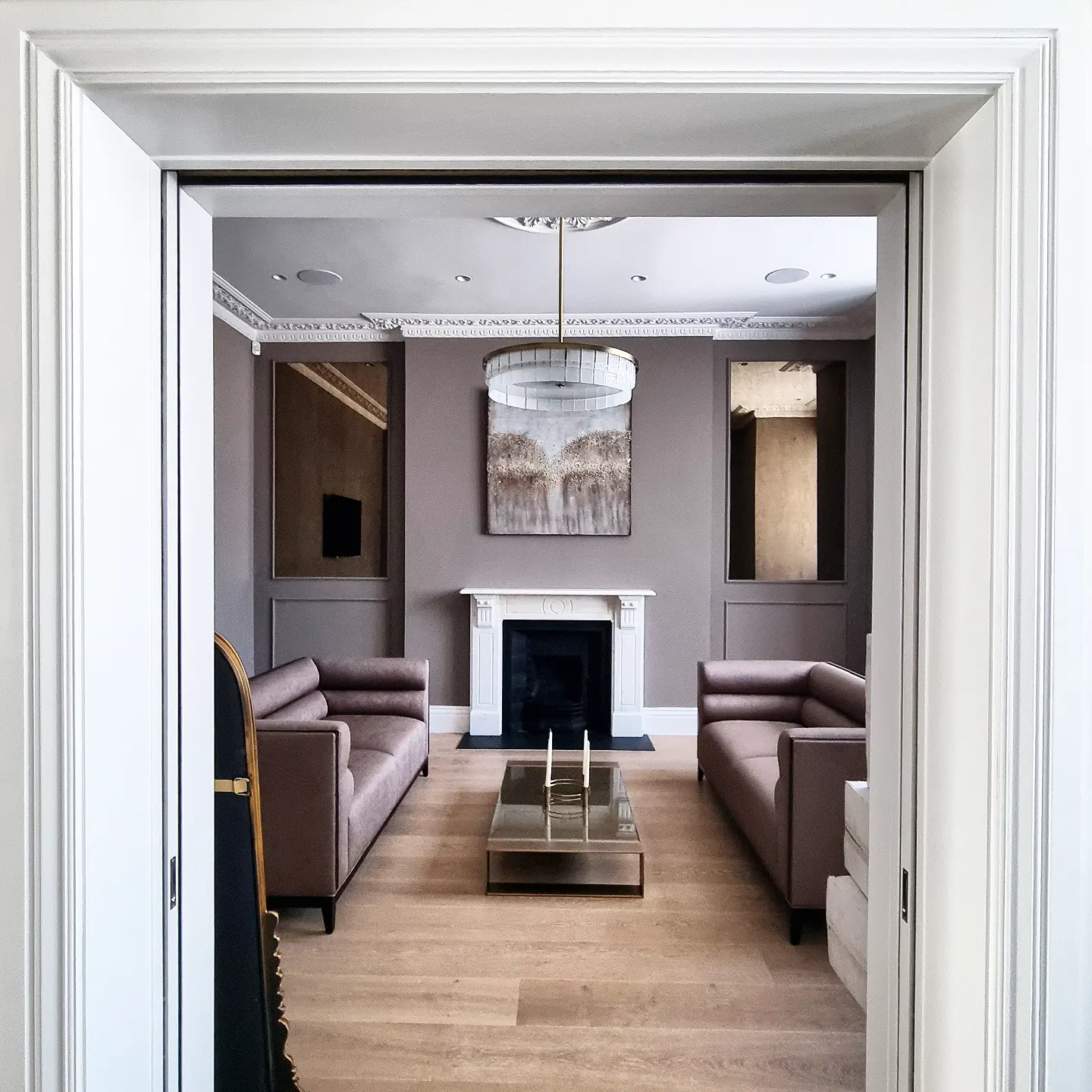
Does More Expensive Paint Mean Healthier Paint?
Not necessarily.
Premium paint may offer beautiful pigments, particular finishes, greater colour depth or other performance characteristics. But price alone does not tell you whether one product has a lower VOC content or is more suitable for your home.
Similarly, words such as “natural”, “eco”, “green” or “low odour” shouldn't replace looking at the actual technical information.
As designers, we believe material decisions should be based on understanding rather than assumptions.

Why Can a Room Still Smell After Painting?
There are many variables.
The type of paint matters, but so do the size of the room, ventilation, temperature, humidity, number of coats and other materials being used during construction.
And remember: the smell on a newly completed project may not be coming from the wall paint alone.
A renovation can involve adhesives, sealants, timber finishes, flooring products, new furniture and numerous other materials.
This is another reason why identifying a smell as simply “toxic paint” can be misleading.

What Should You Do After Decorating?
One of the simplest things you can do is ventilate the space properly.
Open windows and doors where practical and allow fresh air to circulate during application and drying. Always follow the paint manufacturer's instructions regarding application, drying, ventilation and any specific precautions.
If someone using the space has particular sensitivities or concerns, tell your designer and contractor before products are specified.
That gives the project team an opportunity to review suitable products from the beginning rather than trying to solve the issue once decorating is complete.

The Txengo Perspective
At Txengo Studio, we believe clients should ask questions about the materials going into their homes.
Interior design is not simply about what you see.
It is about understanding how materials perform, how they age, how they are maintained and how people will experience the space every day.
When a client asks us, “Why can I smell the paint?”, we don't think the answer should simply be, “Don't worry.”
We would rather explain what has been specified, why it has been selected and what the manufacturer recommends.
The same thinking applies far beyond paint to timber, stone, fabrics, adhesives, flooring and furniture.
Good material specification is about finding the right balance between aesthetics, performance, durability and the people who will live with it.
Because a beautiful home shouldn't only look considered.
It should feel considered too.